



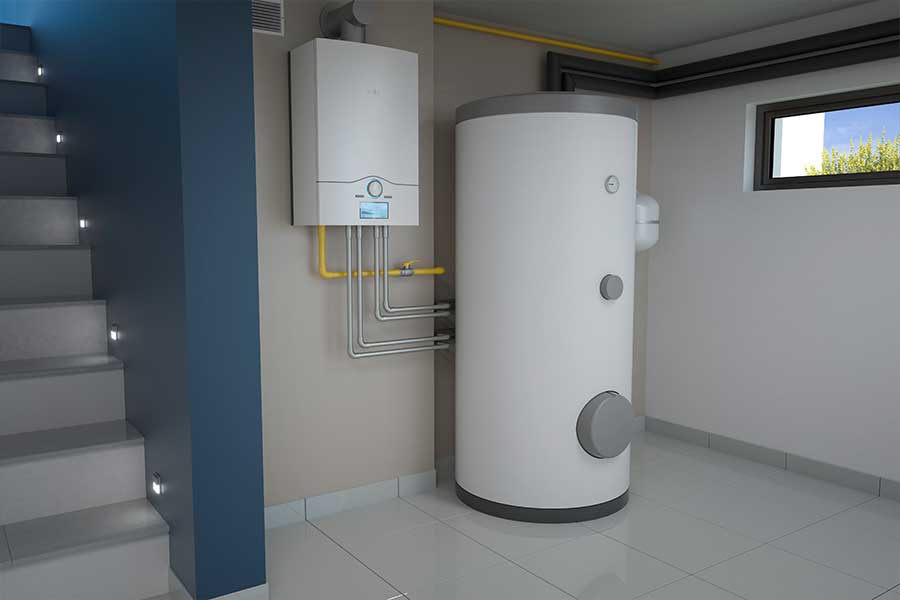
Fall boiler maintenance in Lincolnwood, IL, should happen before the first sustained freeze, usually mid-October. A proper visit covers system pressure, the flue and venting, radiator and air removal, the expansion tank, water quality, and combustion. Homeowners should watch for banging pipes, leaks, uneven heat, and rising gas use between visits. Catching those early is what keeps a boiler out of an emergency in January.
How Do You Know When Your Boiler Needs Repairs?
A boiler tells you it needs attention through sound, water, and heat distribution. Those three signals cover nearly every failure we respond to.
Banging or clanking during a heating cycle usually means trapped air, sediment on the heat exchanger, or in a steam system, water sitting where steam should be moving. Water pooling near the unit or staining below a fitting point to a failing valve, a relief valve doing its job because pressure is wrong, or corrosion in the vessel itself.
Uneven heat across the house, gas usage that climbs without a rate change, or a boiler that fires and shuts down repeatedly all mean the system is working harder than it should. A pilot flame burning yellow rather than blue indicates incomplete combustion and needs immediate professional attention.
If you smell gas, leave the house and call from outside. That one is not a maintenance item.
Across the Lincolnwood homes we service, the systems that avoid emergency calls are almost always the ones on a consistent annual schedule. The failures we get called out for in January were visible in October.
What Should a Fall Boiler Maintenance Visit Cover?
A complete fall visit covers eight areas. Some are homeowner checks. Most require a technician and a combustion analyzer.
System pressure. A residential hot water boiler should read roughly 12 to 15 psi when cold, rising to about 18 to 20 psi at operating temperature. A steam boiler operates far lower, generally under 2 psi. If your gauge sits outside those ranges, something in the fill valve, expansion tank, or relief valve needs attention. Pressure that drifts up on its own usually means a waterlogged expansion tank.
Venting and flue. Blockages, corrosion at the joints, and improper slope all affect how combustion gases leave the building. This is a safety check, not an efficiency check.
Radiators and air removal. Trapped air keeps hot water from filling the radiator, which is why the top stays cool while the bottom is hot. Bleeding radiators is straightforward, but doing it without checking system pressure afterward can leave the boiler short on water.
Combustion analysis. A technician measures what is actually coming out of the flue. This is the only way to know real efficiency rather than the number on the nameplate.
Water quality and sediment. Lincolnwood’s older mid-century housing stock near Touhy and Lincoln has a lot of original piping, and decades of sediment change how the system transfers heat.
Controls and thermostat. Confirming that the aquastat, the thermostat, and any zone valves are calling and responding correctly.
Circulator pump and expansion tank. Both are wear items with predictable service lives.
Safety devices. The pressure relief valve and low-water cutoff get tested, not just inspected.
Scheduled boiler maintenance in the fall handles all of this in one visit and gives you a written condition report you can plan around.
What Are the Warning Signs Your Boiler Needs Help This Fall?
The warning signs worth acting on this fall are new noises, visible water, inconsistent heat, short cycling, and any change in odor. Each one has a specific meaning.
New banging or whistling means air, sediment, or a circulation problem, and each gets worse with run time. Water anywhere around the unit means a component is failing or pressure is out of range. Inconsistent heat across rooms means distribution has changed, which in a hydronic system usually points to air, a stuck zone valve, or a tired circulator.
Short cycling deserves particular attention. A boiler that fires and shuts off repeatedly is not reaching a full cycle, and every restart is the hardest moment of operation for the ignition system and the vessel. Left alone through a Chicago winter, short cycling takes years off a boiler.
Any gas or burning odor means shut it down and call. Do not run the system to see whether the smell repeats.
Boilers past 15 years should get an inspection every fall, regardless of symptoms. At that age, the question is no longer whether something will need attention; it is which component and when. Prompt boiler repair service on a small issue is a fraction of the cost of a mid-winter replacement.
Trust the change more than the condition. A boiler that has always been a little loud is different from a boiler that got loud in September.
How Do You Extend a Boiler’s Efficiency and Lifespan?
Annual professional inspection is the single largest factor, and everything else is secondary to it. A technician checks for leaks, verifies pressure, cleans the heat exchanger and burner assembly, and measures combustion. That visit is what prevents the failures.
Beyond the annual service, a few things genuinely matter:
- Keep the area around the boiler clear. Combustion air matters, and so does access for the technician.
- Watch the pressure gauge monthly during the heating season. A slow drift in either direction is early information.
- Add a programmable or smart thermostat. Hydronic systems respond slowly, so a controller that anticipates rather than reacts reduces both cycling and overshoot.
- Do not wait for new noises. In a boiler, sound changes almost always precede component failure.
Homes in Lincolnwood with steam systems need a different approach than hot water systems, particularly around water level, skimming, and main venting. Steam boiler service is its own discipline, and a technician who works on both will tell you which one you have.
How Can You Lower Heating Costs With Your Boiler?
The largest savings come from combustion efficiency, distribution, and controls, in that order. Most homeowners start with the thermostat, which is actually the smallest of the three.
A clean, correctly tuned boiler burns less gas for the same heat output, which is why the fall service call pays for itself in most homes. After that, insulating exposed supply and return piping in the basement stops heat from being delivered to a space nobody occupies. That is often the highest-return hour of work in the entire house.
Sealing drafts around windows and doors reduces how often the system has to recover. A programmable thermostat set to your actual schedule stops the boiler from maintaining temperature in an empty house.
If your system is beyond 20 years and running at low efficiency, no amount of tuning can close the gap with a modern condensing unit. At that point, the question shifts from saving money on the current boiler to deciding when to replace it.
Frequently Asked Questions
When should Lincolnwood homeowners schedule fall boiler maintenance?
Schedule it between late September and mid-October, before the first sustained freeze. Booking early means you get a normal appointment window rather than competing with the first cold-snap rush. It also leaves time to order any part the inspection turns up while the weather still holds.
What pressure should my home boiler run at?
A residential hot water boiler typically reads 12 to 15 psi cold and 18 to 20 psi at operating temperature. Steam boilers run much lower, usually under 2 psi. If your gauge sits outside these ranges, have the fill valve, expansion tank, and relief valve checked before the heating season starts.
How often does a boiler need professional service?
Once a year, every year, without exception. Boilers are combustion appliances operating under pressure, and the safety checks alone justify the visit. Systems past 15 years or running on original piping benefit from the annual inspection even more, since that is when small problems start compounding.
Can I bleed my own radiators?
You can, but check system pressure immediately afterward and top up if it drops below range. Bleeding removes water along with air, and a boiler running low on water is a bigger problem than a cool radiator. If more than one or two radiators need bleeding every season, air is getting in somewhere and that cause needs to be found.
Keeping Your Lincolnwood Home Warm All Season
Boiler maintenance is not complicated, but it is time-sensitive. The work that protects you through a Chicago winter has to happen before the winter starts, and every year, the homes that skip it are the ones calling on the coldest night in January.
Book the inspection while the weather still gives you options. Our NATE-certified technicians will check pressure, combustion, venting, and safety controls, then tell you plainly what needs attention now and what can wait until spring. To get on the fall schedule, schedule your appointment today.